
Manufacturing costs: understanding & controlling
A practical perspective on manufacturing costs in connected manufacturing environments—and how real-time data, integrated systems, and 3D Digital Twins help teams see what’s really happening.

- What is Manufacturing Costs?
- Why understanding manufacturing costs matters for business performance
- Why manufacturing costs rise — and what can (and can’t) be controlled
- Hidden manufacturing costs that don’t show up in reports
- Operational drivers that shape manufacturing costs
- From cost reports to cost awareness
- Strategic considerations for long-term financial viability in manufacturing
- FAQ about manufacturing costs
What is Manufacturing Costs?
Manufacturing costs are the total costs required to produce goods—from the moment inputs enter the production system to the point a finished product is ready for sale.
For CFOs, CEOs, and COOs, the focus is less on accounting detail and more on understanding what shapes costs in practice—and where leadership decisions can influence outcomes. At a high level, manufacturing costs typically include three broad elements:
- Direct materials: The physical inputs that become part of the product, such as raw materials, components, and production-related consumables.
- Direct labor: The workforce directly involved in producing the product—operators, assembly workers, and line staff.
- Manufacturing overhead: The costs required to run production that aren’t tied to a single unit, including equipment depreciation, utilities, maintenance, quality checks, production supervision, and factory-related systems.
Where executives often run into trouble is that “manufacturing costs” in reports can mask what is really happening on the shop floor. Two sites producing the same product can show very different cost profiles—not because finance calculates differently, but because the manufacturing system behaves differently. Downtime patterns, throughput stability, scrap and rework rates, energy peaks, and maintenance practices all push costs up or down in ways that aren’t always obvious in financial summaries.
A useful way to think about manufacturing costs is as a business outcome created by three forces working together:
- Inputs (materials, labor, energy)
- Execution (process stability, availability, quality)
- Control (visibility, response speed, and how quickly issues are detected and contained)
When these forces are well aligned, costs tend to remain predictable. When they are not, cost pressure builds—often long before it appears in reports.
In practice, aligning these three forces is far from simple. Most manufacturing environments rely on dozens—or even hundreds—of different systems: PLCs, MES, ERP platforms, IoT solutions, dashboards, charts, and reporting tools. Each of them serves a purpose and brings its own benefits. Individually, they make certain tasks easier and improve visibility in specific areas.
At the same time, this fragmentation creates a familiar challenge. Leaders often have to move between multiple systems to track individual KPIs, piece together information, and understand what is really happening. Instead of clarity, this can lead to additional effort, constant context switching, and data overload—making it harder, not easier, to maintain control.
Why understanding manufacturing costs matters for business performance
For executive teams, manufacturing costs are not just a production metric—they are a direct driver of business performance. How well these costs are understood influences pricing power, margin stability, competitiveness, and the quality of strategic decisions made across the organization.
Pricing, margins, and competitive positioning
When manufacturing costs are not fully visible, pricing decisions often rely on averages or outdated assumptions. This makes it harder to protect margins or respond confidently to market pressure. Leaders who have a clearer view of what, where and why costs are created inside the factory are generally better positioned to price products accurately, respond faster, and remain competitive without constant firefighting.
Profitability depends on cost behavior, not just cost levels
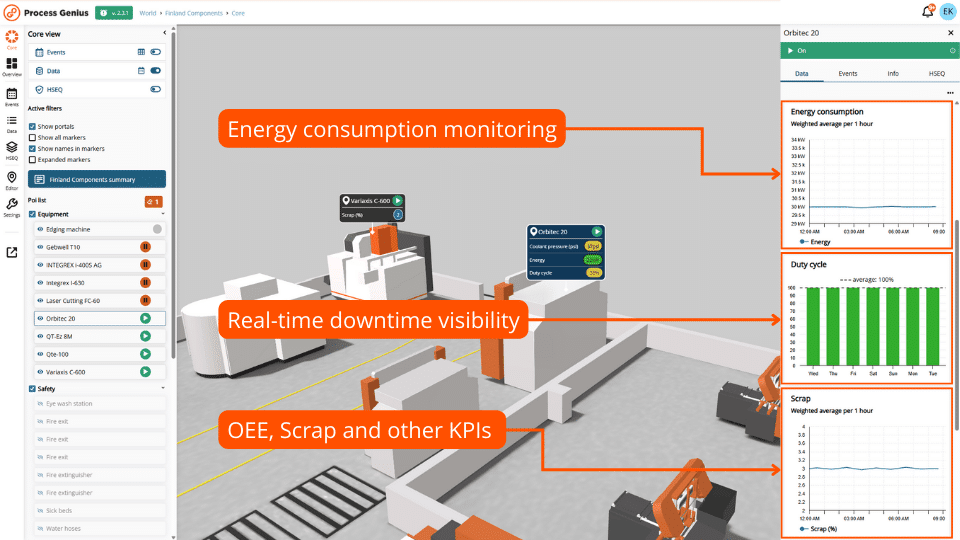
Profitability is shaped not only by how high manufacturing costs are, but by how stable they remain over time. Frequent downtime, quality issues, or energy consumption spikes introduce cost swings and risk. Even when total costs appear acceptable on paper, this instability makes them harder to predict. A clearer understanding of what drives these fluctuations makes it possible to focus on stabilizing operations rather than reacting after the impact is already felt.
Better budgeting, forecasting, and financial planning
Understanding of manufacturing costs also improves budgeting and forecasting. When leadership can distinguish between structural costs and those caused by operational issues, financial plans become more realistic. This reduces surprises, narrows the gap between forecasts and actuals.
Aligning operations and finance around the same reality
Just as importantly, understanding manufacturing costs helps align finance and operations. Cost reports typically explain what happened, but rarely why. Without operational context, decisions are made with incomplete information. Connecting costs to process performance and asset behavior, finance and operations can work from the same picture—and move faster together.
In short, understanding manufacturing costs comes down to understanding how the factory actually operates and how day-to-day decisions influence results.
Why manufacturing costs rise — and what can (and can’t) be controlled
Manufacturing costs rarely increase for a single reason. In most cases, they rise gradually as several factors interact over time. For leadership teams, the critical step is to clearly separate what sits outside the company’s control from what can be influenced through better operational management.
What cannot be fully controlled
Some cost drivers are largely shaped by external conditions:
- Changes in raw material prices: Global supply and demand, geopolitical factors, and logistics constraints can drive sudden price increases.
- Energy market fluctuations: While efficiency can be improved internally, baseline energy prices are often dictated by external markets.
- Regulatory and compliance changes: New standards, tariffs, or reporting requirements can increase production-related expenses with little warning.
These factors explain why manufacturing costs rise, but they don’t tell the whole story.
What can be influenced and taken under control
A significant share of manufacturing cost increases originates inside the operation. These are the areas where leadership decisions have the greatest impact:
- Inefficient processes: Poorly balanced lines, frequent changeovers, or unclear work standards reduce throughput and increase labor and energy consumption.
- Material waste: Scrap, rework, and quality defects consume materials, time, and capacity without adding value.
- Unplanned downtime: Equipment failures or delayed maintenance interrupt production, trigger overtime, delay deliveries, and increase pressure across the plant.
- Slow detection of problems: When issues are identified late, small deviations have time to escalate into expensive disruptions.
These issues rarely appear overnight. They develop gradually and often remain hidden until they surface as higher costs in financial reports. By that point, the opportunity to intervene early has usually passed.
This is why manufacturing cost control cannot rely on financial data alone. It requires understanding how processes behave in real time, how assets perform day to day, and where small problems begin before they grow into costly ones. Gaining that visibility allows leaders to focus on the cost drivers they can actually influence—rather than reacting to cost increases after they have already occurred.
Hidden manufacturing costs that don’t show up in reports
Some of the most damaging manufacturing costs are not the ones executives debate in meetings. They’re the ones that never show up clearly in reports at all. These hidden costs don’t usually appear as a single line item, but over time they quit negatively affect margins, complicate planning, and increase operational risk. They tend to come from very familiar places on the shop floor:
- Unplanned downtime and frequent micro-stoppages
- Rework, scrap, and recurring quality deviations
- Energy inefficiencies and sudden consumption spikes
- Maintenance overruns and emergency repairs
- Safety incidents and HSE-related disruptions
- Delays in decision-making caused by lack of real-time insight
Individually, many of these issues don’t look dramatic. A short stop here, a quality issue there. But when they repeat day after day, their impact compounds. A few minutes of downtime can lead to overtime later in the shift. Missed production targets can trigger expedited logistics or customer penalties. By the time these effects are visible in financial results, the opportunity to act early is already gone.
Why hidden manufacturing costs grow without being noticed
Hidden manufacturing costs usually increase not because teams ignore problems, but because problems are detected too late or without enough context. Traditional reporting cycles are backward-looking by design—they explain what happened after the fact. On the shop floor, however, cost-driving issues develop in real time. Small deviations in equipment behavior, process conditions, or operator actions can quietly escalate. Without early visibility, they remain background noise until they turn into failures, disruptions, or rising costs that are suddenly hard to explain.
This is why many manufacturers are moving toward real-time anomaly detection. The ability to spot abnormal patterns as they emerge—rather than after something breaks—can dramatically reduce downstream cost impact.
The key point is simple: hidden manufacturing costs are rarely random. They are symptoms of deeper operational drivers—asset availability, process stability, energy usage, maintenance practices, and safety conditions. Reducing cost pressure in a sustainable way often involves a shift in focus. Rather than following individual cost items after they appear in reports, it helps to understand and influence the operational factors behind them. Better visibility, connected data, and contextual insight support this shift.
Operational drivers that shape manufacturing costs
Manufacturing costs are shaped long before they show up in financial reports. They are the result of how the production system behaves every day—how assets run, how processes flow, and how quickly issues are detected and addressed. Financial reports summarize outcomes, but the real cost pressure is created in operations. Understanding these drivers is key to moving from reactive cost management to proactive control.
Asset availability and unplanned downtime
Unplanned downtime is one of the most expensive and underestimated cost drivers in manufacturing. When a critical asset goes down, the impact is rarely limited to lost production minutes. Downtime quickly affects:
- Throughput, reducing the amount of sellable output
- Labor costs, as overtime and inefficient use of skilled workers increase
- Delivery performance, leading to penalties, expedited shipping, or frustrated customers
What makes downtime especially costly is the way it cascades. A short stop on one machine can disrupt upstream and downstream processes, throwing schedules off balance and amplifying the financial impact. When failures are detected late or without context, teams have to react quickly instead of taking a more measured approach.
This is why many manufacturers invest in predictive maintenance and condition monitoring. The real value is not reacting faster once something breaks, but seeing early warning signs before failures escalate. Improving asset availability is fundamentally about visibility.
Process stability, Variability, and Rework
Even when equipment is available, unstable processes quietly push manufacturing costs upward. Variability in cycle times, quality, or material flow almost always leads to:
- Higher material waste and scrap
- Increased energy consumption due to inefficient operation
- Labor inefficiencies caused by interruptions and rework
Rework and quality losses are particularly deceptive. Individually, they often seem manageable. Over time, however, repeated deviations consume capacity, delay orders, and hide the true cost of production. Margins erode gradually, while reports continue to show acceptable averages. Stabilizing processes requires more than hitting output targets. It requires understanding how production actually behaves from shift to shift. This is where industrial data analytics and connected manufacturing become essential—revealing patterns and relationships that traditional KPIs often miss.
Energy, maintenance, and HSE as cost-shaping factors
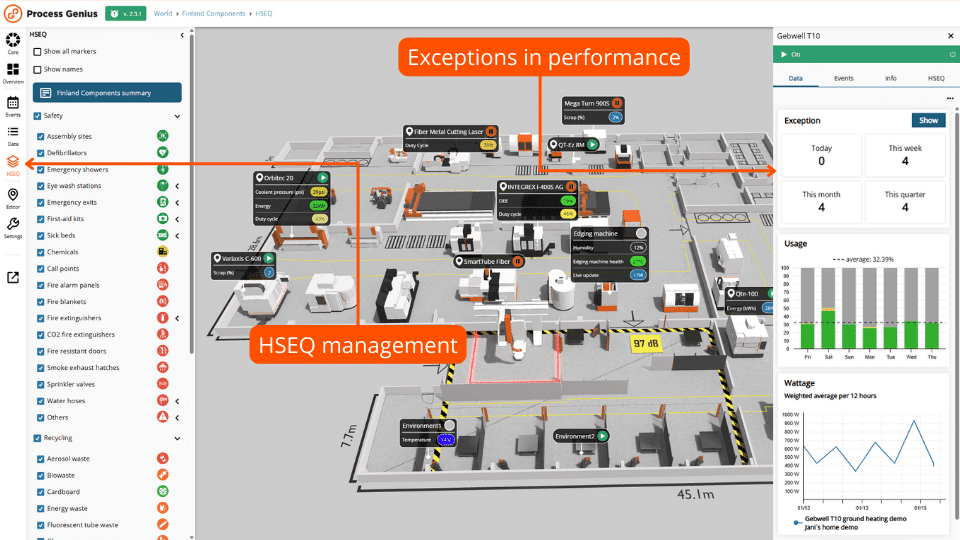
Energy usage, maintenance performance, and health, safety, and environment (HSE) conditions are often managed separately. In practice, they are tightly connected—and together they have a significant influence on manufacturing costs.
- Energy inefficiencies and consumption spikes increase operating expenses and often point to unstable processes.
- Maintenance inefficiencies raise failure rates, drive emergency repairs, and shorten asset lifecycles.
- HSE incidents disrupt production, create indirect costs, and introduce long-term operational risk.
These factors are rarely connected to cost discussions early enough because they cut across organizational boundaries. Without a unified operational view, warning signs stay siloed until they eventually show up as financial problems. Modern industrial monitoring and remote monitoring help close this gap by making conditions visible as they change—not after incidents occur. Recognizing these operational drivers helps to move away from retrospective cost reports toward continuous cost awareness.
From cost reports to cost awareness
Most manufacturing organizations already measure costs in great detail. The real challenge isn’t a lack of data—it’s the lack of cost awareness. In other words, understanding why costs are changing and what is driving them before financial results are already fixed.
Measuring costs vs. Understanding cost drivers
Traditional cost reports are retrospective by nature. They explain what happened last week, last month, or last quarter. That information is essential for financial control, but it offers limited help when decisions need to be made on the shop floor or across operations. Cost awareness works differently. It focuses on:
- Early signals, not final outcomes
- Operational causes, not aggregated numbers
- Context, not isolated KPIs
Manufacturing costs rarely spike overnight. They usually creep up gradually—through increasing downtime, growing process variability, or a series of small anomalies that seem harmless on their own. By the time these patterns show up clearly in financial summaries, the opportunity to intervene with minimal impact has often passed.
A key challenge here is data management. Manufacturing environments generate vast amounts of data, but without the right structure and context, important signals get lost in noise. This is why many organizations are rethinking how they manage and contextualize operational data.
Why early signals matter more than monthly reports
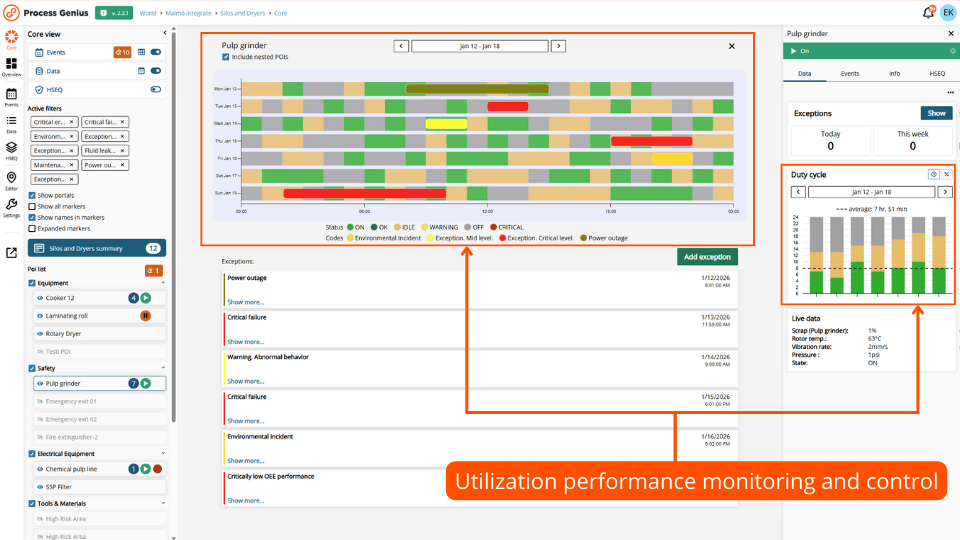
Early operational signals give leadership teams room to act while issues are still manageable. For example:
- Detecting abnormal equipment behavior early can prevent a costly breakdown.
- Identifying recurring process deviations can stop waste and rework from becoming the norm.
- Spotting unusual energy or maintenance patterns can prevent inefficiencies from becoming structural.
This is where real-time visibility and connected data change the nature of cost management. Instead of waiting for consolidated reports, executives gain ongoing insight into the conditions that shape cost outcomes as they evolve. Approaches such as real-time anomaly detection and continuous industrial monitoring help surface deviations early—before they escalate into larger problems.
Cost awareness as a business capability
Cost awareness is not only a finance function—it is a decision making capability. It depends on shared visibility across operations, maintenance, HSE, and management, as well as alignment between financial goals and operational reality. When decision makers have tools that make complex operational data understandable, they can see how everyday behavior on the shop floor influences cost trends in near real time.
As a result, conversations change. Instead of asking “Why did costs increase?”, teams start asking “What is changing in our operations right now, and what should we do about it?” This shift—from cost reporting to cost awareness—creates the foundation for more resilient, predictable manufacturing performance.
Strategic considerations for long-term financial viability in manufacturing
For executives, long-term financial viability in manufacturing is rarely achieved through short-term cost cutting. It is built through sustained operational control, the ability to anticipate issues early, and the discipline to invest in capabilities that reduce inefficiencies over time.
Cost stability comes from control, not constant reduction
Many cost-reduction initiatives are designed to deliver quick results. Hiring is frozen, maintenance is postponed, or safety margins are tightened. These actions may improve short-term numbers, but they often create new risks and make costs harder to predict later on. Manufacturers that perform well over the long term usually take a different path. Instead of chasing short-term savings, they focus on:
- Keeping processes stable rather than pushing people harder
- Preventing failures instead of reacting to them
- Reducing variability instead of relying on averages
This approach doesn’t always produce dramatic short-term savings, but Digital Twin in manufacturing often leads to something many leadership teams value more: predictable costs and fewer surprises.
Investing in visibility as a practical financial decision
One of the most important decisions executives make is where to invest to gain better insight into how their operations actually run. Tools that improve visibility—such as connected manufacturing platforms, industrial data analytics, and monitoring systems—help teams spot inefficiencies before they turn into serious cost problems.
This is where 3D Digital Twins can be useful. A 3D Digital Twin doesn’t calculate manufacturing costs. What it does is help decision-makers see what’s happening across assets and processes in a clear, intuitive way. That makes it easier to:
- Understand where downtime or inefficiencies start
- See how issues spread across systems
- Have more informed discussions between operations and finance
In complex production environments, this kind of visibility helps teams manage day-to-day complexity before it turns into long-term cost pressure. In OEM manufacturing 3D Digital Twins are used to better coordinate operations and reduce friction, well before costs begin to escalate. For many organizations, the key is not whether to adopt a Digital Twin, but how to approach the implementation of a Digital Twin in a practical, step-by-step way that is grounded in real operational needs rather than abstract models.
Connecting data, people, and decisions
Long-term financial health also depends on how well information flows across the organization. When operational data, maintenance insights, and HSE information sit in separate systems, leaders are forced to make decisions with an incomplete picture.
A more connected setup—combining industrial data analytics, remote monitoring, and real-time operational insight—helps teams make decisions faster and with more confidence. It also reduces reliance on assumptions and manual reporting. In practice, this level of visibility often requires better ERP MES integration, so operational reality on the shop floor is consistently reflected in planning, reporting, and decision-making tools rather than living in isolated systems.
In many environments, this connectivity is supported by common data standards such as OPC UA, which make it easier for different systems to share reliable, structured information across the factory and into higher-level decision tools.
A practical view on sustainable cost control
From a leadership point of view, sustainable cost control is not about pushing harder every quarter. It’s about creating the conditions where costs stay under control naturally. Over time, that usually means:
- Investing in visibility instead of constant firefighting
- Catching problems early rather than explaining them later
- Giving teams tools that help them understand what’s happening and act on it
Manufacturing costs will always be affected by external factors. But organizations that understand their operations well are much better prepared to absorb shocks, protect margins, and stay financially stable.
In the end, manufacturing costs are not just financial results. They reflect how well operations are understood and managed. Leaders who move beyond retrospective reports and focus on operational visibility—asset performance, process stability, energy use, maintenance, and safety—put themselves in a far stronger position to influence costs before they get out of control.
Read also:
- The ultimate guide to digital twin
- Digital twins in manufacturing – 8 reasons why digital twins are important
- 5 ways how manufacturers can use digital twins for sustainability
FAQ about manufacturing costs

Digital Marketing & Business Specialist