
Digital Twin in Manufacturing
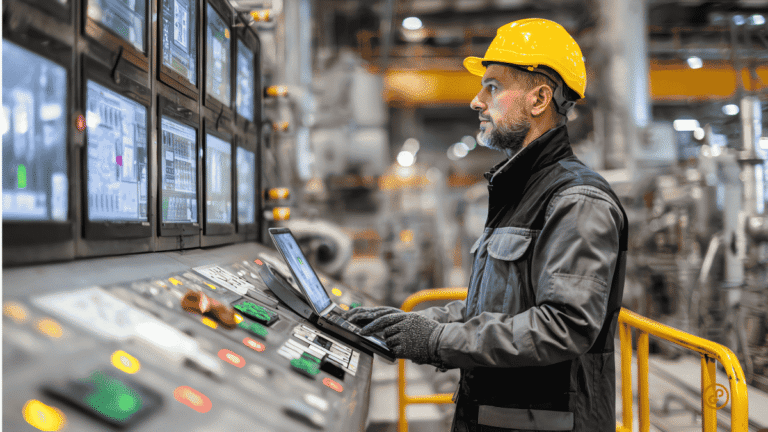
In manufacturing industries, a digital twin helps bring together data from production systems, machinery, maintenance operations, and other business systems into a single, up-to-date environment. It enables real-time monitoring of production activities, identification of anomalies, and continuous operational improvement based on actual usage and performance data. As such, the digital twin is one of the key technologies enabling connected manufacturing and integrating it into daily production operations.
Existing systems such as ERP, MES and MRP continue to serve their own specialized purposes, while the Digital Twin can complement them by bringing relevant information into a common operational context. Learn more about the differences between ERP, MES, MRP and Digital Twins.
A digital twin can be applied at the level of an individual machine, a production line, or an entire factory. Its specific use depends on the organization’s objectives. For some companies, the primary focus may be production optimization; for others, predictive maintenance, quality management, or equipment performance monitoring may be of greater importance.
In manufacturing, a digital twin is particularly valuable when information from multiple systems needs to be consolidated into a single, easy-to-understand view. This allows production personnel to quickly gain a comprehensive understanding of the current situation without having to search for information across numerous disconnected systems. A Digital Twin ontology helps give this combined information a consistent structure by defining how machines, production lines, processes, systems, properties, and their relationships are represented within the Digital Twin.
If you are not yet familiar with the basic concept of a digital twin, it is recommended that you first learn what a digital twin is and how it works.
Production Optimization
A digital twin enables production operations to be analyzed using both real-time and historical data. This makes it possible to identify production bottlenecks, underutilized resources, and situations where the use of machinery, personnel, or materials can be improved.
When production data is consolidated into a single view, the impact of different alternatives can also be evaluated before changes are implemented. Simulation and scenario analysis can help assess, for example, changes in production capacity, resource allocation strategies, or the effects of different production schedules.
The objective is not merely to increase production output, but to improve overall operational efficiency. Greater visibility into production processes can reduce waste, help organizations make better use of existing capacity, and support more effective management of manufacturing costs.
In a production environment specializing in light and medium-duty CNC machining, digital twin technology has been utilized for applications such as maintenance monitoring and improving the utilization of production time and available resources. The EFM Group customer case provides a closer look at how a digital twin can be applied in a manufacturing environment.
Predictive Maintenance
A digital twin helps organizations transition from reactive maintenance to a more proactive and predictive approach. By bringing together machine and equipment usage data, sensor measurements, and maintenance history, potential anomalies can be identified before an actual failure occurs. Predictive maintenance leverages this collected data to assess future maintenance needs and anticipate possible equipment failures.
This enables maintenance teams to schedule interventions based on actual equipment condition and operational requirements. Maintenance does not need to be performed prematurely as a precaution, while potential failures can be addressed before they result in unplanned downtime or operational disruptions.
Predictive maintenance can improve equipment reliability, extend asset lifecycles, and reduce overall maintenance costs. At the same time, production planning becomes more efficient, as maintenance activities can be better aligned with production schedules and operational demands.
Quality Control
A digital twin can support quality management by bringing together production process events and quality-related data into a single view. By monitoring critical process parameters in real time, deviations can be detected and addressed during production rather than only after issues are discovered in the finished product.
This is particularly valuable in manufacturing environments where even small changes in factors such as temperature, pressure, processing time, or other operating conditions can have a significant impact on product quality.
For example, Snellman utilizes a digital twin to monitor cooking processes in real time. Production status can be tracked throughout the process, allowing operators to respond quickly to any required adjustments. This helps ensure consistent product quality while reducing waste and production losses.
The Snellman customer case provides a closer look at how a digital twin can be used to support real-time process monitoring and quality assurance in practice.
Performance Monitoring
A digital twin makes it easier to monitor the performance of both production operations and equipment. By combining real-time information with historical data, users can see not only the current situation but also how performance has evolved over time.
Monitoring can focus on metrics such as equipment utilization, production capacity, energy consumption, downtime, or other key performance indicators that are important to the organization. On a broader level, asset performance management helps organizations systematically evaluate equipment operation, reliability, and lifecycle performance.
When performance metrics are presented alongside the physical production environment, it becomes easier to understand the root causes of anomalies and performance variations. At the same time, production data can be leveraged for continuous improvement initiatives. Industrial data analytics helps transform collected data into actionable insights that support operational improvements and well-informed decision-making.
Performance monitoring therefore enables organizations to move beyond decisions based on isolated observations toward a culture of continuous, data-driven improvement. By evaluating the impact of changes using the same data sources, organizations can identify which improvement initiatives genuinely enhance production efficiency and deliver measurable results.

Digital Twin in the Process Industry
In the process industry, the different stages of production form a tightly interconnected system. A change in one part of the process can affect subsequent production stages, product quality, energy consumption, or even the performance of the entire production facility. For this reason, having an up-to-date and comprehensive view of the production process is especially important. A digital twin helps bring together data generated by automation systems, production systems, maintenance platforms, and other information sources into a single digital environment. Users can view the overall state of the process while also drilling down into information related to individual assets, process stages, or measurement points. This supports production monitoring, anomaly detection, and root-cause analysis. At the same time, different user groups can utilize the same real-time operational view in their daily work. In this way, a digital twin provides a shared view of the process instead of allowing information to remain fragmented across separate systems and organizational data silos. The digitalization of the process industry is part of a broader transformation in which Industry 4.0 increasingly integrates production, automation, data, and intelligent technologies into a connected and data-driven operating environment.Real-Time Process Monitoring
In the process industry, large volumes of data are continuously generated from sources such as temperature measurements, pressure readings, flow rates, energy consumption, production volumes, and equipment status. However, individual data points alone do not provide a complete understanding of how the production process is performing. A digital twin helps place this information into the correct operational context. Users can see where within the process a change is occurring, which equipment is affected, and how the situation relates to the rest of the production chain. Real-time monitoring also makes it easier to identify anomalies. By comparing current operating conditions with historical data and established baseline performance, users can detect deviations earlier and investigate their potential causes. Anomaly detection helps focus attention on situations where process behavior changes unexpectedly. At the same time, the data collected through process monitoring provides the foundation for broader analysis. Through industrial data analytics, production data can be used to identify trends, compare process performance, and support continuous operational improvement.Remote Monitoring
Not all experts at a production facility need to be physically present at the process site to gain a clear understanding of its operation.A digital twin enables production and equipment data to be accessed remotely, provided the necessary information has been integrated into the digital operating environment. Industrial communication standards such as OPC UA can help make real-time machine and process data available to these connected applications.
Remote monitoring in industrial environments helps experts track production status, identify anomalies, and assess situations regardless of their physical location. Remote monitoring is particularly valuable for organizations operating multiple production facilities or for specialists responsible for overseeing several sites. A shared digital view allows facilities to be compared and expertise to be leveraged across different plants and geographic locations. It can also accelerate troubleshooting and problem resolution. When an expert has access to the same real-time information as personnel on the production floor, discussions can be based on a common operational picture, reducing the need for specialists to travel to the site in order to assess the situation. At the same time, remote monitoring can improve safety by reducing unnecessary visits to difficult-to-access or high-risk production environments. This aspect is discussed in more detail later in this article in the section “Digital Twins Improve Workplace Safety.”Data-Driven Decision-Making
In the process industry, decisions are constantly being made regarding production, maintenance, quality, energy management, and resource utilization. The challenge is often not a lack of data, but rather that the necessary information is distributed across multiple systems and reviewed separately from the broader production process. A digital twin helps transform fragmented data into a unified operational view. When real-time production information, historical data, and process-related performance metrics are available within the same environment, users can evaluate alternatives and make decisions based on a more complete understanding of the situation. In practice, data-driven decision-making means that production improvements, maintenance activities, and operational changes can be justified using actual operational data rather than isolated observations or assumptions. It also enables organizations to track the impact of decisions and compare results against previous performance. In Stora Enso’s production environment, a digital twin has been utilized to integrate information from multiple data sources and improve data visualization. The solution provides users with a shared view of the production environment and its operations. The Stora Enso customer case demonstrates in practical terms how a digital twin can be applied to meet the needs of the process industry. When production data is presented in a clear, understandable format and within the proper operational context, decisions can be made more quickly and their effects can be evaluated more systematically. The value of a digital twin therefore lies not simply in collecting data, but in transforming that information into actionable insights that support users’ daily work and decision-making.
Digital Twins Improve Workplace Safety
In industrial environments, workplace safety depends on access to up-to-date information, thorough training, and ensuring that employees understand the risks associated with their operating environment before work begins. A digital twin can support these objectives by integrating safety-related information into a visual and easily understandable operational environment.
A digital twin can incorporate information such as equipment locations and status, safety instructions, access routes, maintenance targets, and identified environmental hazards or anomalies. When this information is presented within the proper operational context, users can more easily understand what needs to be considered before starting a task.
For example, workers and contractors can review the work environment, identify potential hazards, locate relevant equipment, and familiarize themselves with safe access routes before entering the physical site. This improves situational awareness and helps reduce the likelihood of accidents caused by misunderstandings or incomplete information.
A digital twin can therefore complement an organization’s Health, Safety, and Environment (HSE) initiatives and broader workplace safety efforts by providing a new way to visualize, understand, and manage workplace conditions and safety-related information.
Training and Onboarding
Getting familiar with an industrial environment can be challenging, especially for new employees, external maintenance personnel, and contractors. In a large production facility, workers must understand not only their specific tasks but also the facility layout, access routes, equipment locations, and potential hazards within the environment.
A digital twin can be used as a training and onboarding tool before personnel even enter the physical site. Employees can explore the facility virtually, review their future work area, and gain an understanding of how to navigate the environment safely.
Training materials can include safety instructions, documentation, videos, and equipment-specific information. Instead of searching through multiple systems or documents, users can access relevant information directly within the area of the digital environment to which it applies.
This can be particularly valuable for maintenance tasks that are performed infrequently. Personnel can review the maintenance location and associated procedures in advance, allowing the work to be planned more thoroughly and reducing the amount of time required on-site.
A digital environment can also help standardize onboarding processes. When employees and partners are presented with the same environment and the same safety information, the delivery of critical instructions becomes less dependent on individual trainers or specific situations.
Remote Monitoring as a Safety Enabler
Not all observations and inspections need to be performed physically within the production environment. When data about the status of machines, equipment, and processes is available through a digital twin, experts can gain an initial understanding of the situation remotely.
This is particularly beneficial in locations that are difficult to access, geographically extensive, or inherently hazardous. Before a physical inspection takes place, users can determine where an anomaly is located, which equipment is involved, and what information is already available about the situation.
Remote monitoring does not replace physical safety inspections or the expertise of trained personnel. However, it can reduce unnecessary movement in high-risk areas and enable better preparation before entering the site.
When experts in different locations can access the same real-time operational view, the right expertise can be brought into troubleshooting and incident response more quickly. As a result, remote monitoring in industrial environments can support both operational efficiency and safer working practices.
From a workplace safety perspective, one of the key benefits of a digital twin is its ability to make critical information readily accessible to users. When employees have access to up-to-date information about their environment, equipment, and potential risks before and during a task, work can be planned more effectively and safety-related factors can be identified and addressed earlier.
By providing the right information in the right context, a digital twin helps organizations strengthen safety awareness, improve risk management, and create a safer working environment for everyone involved.
Digital Twins Reduce Operational Costs
Industrial operating costs are influenced by many factors, including production downtime, maintenance activities, energy consumption, material usage, and the utilization of machinery and personnel. A digital twin helps identify opportunities for improvement by bringing together information from different systems into a single view.
Greater visibility does not reduce costs by itself, but it helps organizations understand where resources are being used inefficiently and where unnecessary costs are being generated. When decisions are based on up-to-date operational data, improvement initiatives can be targeted more precisely to the areas where they will have the greatest impact.
A digital twin can therefore support the reduction of operational costs by improving maintenance practices, optimizing resource utilization, and enhancing production efficiency.
Reducing Downtime
Unplanned downtime can result in significant costs due to production interruptions, lost capacity, and urgent maintenance activities. The more critical the equipment or process, the greater the impact a single disruption can have.
A digital twin enables continuous monitoring of equipment and process conditions. Real-time data can be combined with historical information, maintenance records, and identified anomalies, allowing potential issues to be detected at an earlier stage.
When abnormal behavior is identified before an actual failure occurs, maintenance teams can assess the situation and plan the necessary actions more effectively. This supports the transition from reactive maintenance to a predictive maintenance approach and helps reduce unplanned downtime.
The benefits of a digital twin extend beyond fault detection alone. When users can see exactly which piece of equipment or stage of the process is affected, along with all relevant contextual information, identifying the root cause of the issue and planning corrective actions can also be significantly accelerated.
More Efficient Resource Utilization
Cost efficiency is not only about reducing expenses. In industry, a significant portion of efficiency comes from how effectively existing machinery, production capacity, materials, and workforce resources are utilized.
A digital twin helps create a comprehensive view of resource utilization. When information related to production, maintenance, and equipment performance is available within the same environment, organizations can identify underutilization, bottlenecks, and situations where resource allocation could be improved.
This enables organizations to make more effective use of existing capacity before investing in new assets. At the same time, they can evaluate how production changes affect factors such as throughput times, utilization rates, and manufacturing costs.
Understanding how manufacturing costs are generated helps organizations identify the stages of production where efficiency improvements can deliver the greatest financial benefit.
Optimizing resource utilization also supports project management and investment planning. When decisions are based on actual operational data, organizations can more accurately determine whether additional capacity is truly needed or whether the existing production environment can be utilized more effectively.
Energy Efficiency
Energy consumption represents a significant portion of operating costs for many industrial companies. A digital twin can help connect energy-related data with production events, equipment, and processes.
Instead of analyzing energy consumption only at the level of an entire factory or production facility, the information can be linked more precisely to individual machines, production lines, or process stages. This makes it possible to identify where and when energy is being consumed and to detect situations in which consumption deviates from normal operating conditions.
When energy consumption is analyzed alongside production volumes and equipment performance, energy efficiency can also be assessed. The goal is not simply to reduce energy consumption if doing so negatively impacts production performance. Rather, the objective is to find an operating model in which energy is used as efficiently as possible in relation to production requirements.
Greater visibility into energy usage can help reduce unnecessary consumption while also supporting the organization’s sustainability goals. More efficient use of energy and other resources is also a key component of the industrial green transition.
A digital twin therefore enables operating costs to be viewed as part of a broader operational picture. Optimizing downtime, resource utilization, and energy consumption are not separate objectives; they work together to influence production performance, profitability, and long-term competitiveness.

Digital Twins in Infrastructure
The use of digital twins is not limited to industrial production environments. The same principle can also be applied to infrastructure management, where data collected from physical assets and systems is combined into a digital representation.
Digital twins can be utilized in applications such as telecommunications networks, wind turbines, bridges, highways, and water distribution systems. Depending on the use case, a digital twin can help monitor infrastructure conditions, identify anomalies, and support maintenance planning and other operational activities based on real-time information.
Remote Monitoring of Infrastructure
Large infrastructure assets are often geographically dispersed, making continuous physical inspections time-consuming and resource-intensive. A digital twin can consolidate information from multiple sites into a single operating environment, enabling their condition to be monitored remotely.
Remote monitoring makes it possible to track the status of equipment, structures, and networks while identifying assets that require further inspection. This helps organizations focus expert attention and maintenance resources where they are needed most.
Project Management and Lifecycle Management
Digital twins can also be used to support the management of infrastructure projects. The digital environment can serve as a shared view that brings together information related to design, construction, and the current state of the asset.
After project completion, the same digital information can continue to be used for operations and maintenance. This ensures that the information created during the project supports the ongoing management of the asset throughout its lifecycle rather than remaining isolated in separate systems and documents.
The potential of digital twins therefore extends beyond individual factories and production lines to larger physical environments and infrastructure assets. From Process Genius’s perspective, however, the primary focus remains on industrial applications, where digital twins can help integrate data from production, maintenance, and other systems to support daily operations.
The Future of Digital Twins in Industry
The industrial operating environment is evolving rapidly as automation, artificial intelligence, IoT technologies, and data analytics continue to advance. At the same time, the amount of data available to organizations is increasing, creating a growing need to consolidate information from different systems into a format that is easy to access and utilize.
A digital twin provides a shared digital environment that can evolve alongside the organization’s needs. When data from production, maintenance, and other operational systems is brought together into a single platform, analytics, simulation, and AI-driven solutions can be utilized more effectively. Digital twins are therefore a key part of the broader Industry 4.0 transformation, where physical operations and digital information are becoming increasingly interconnected.
In the future, the importance of digital twins will not be based solely on technological innovation, but on their ability to help organizations make better use of the data they already possess. Real-time operational visibility, improved performance monitoring, and data-driven decision-making support continuous improvement and help organizations adapt to changing business needs.
Process Genius’s Genius Core™ digital twin platform integrates data from multiple sources into a visual operating environment that can be tailored to the specific needs and use cases of industrial organizations.
FAQs
How Is a Digital Twin Used in Industry?
A digital twin can be used in industry for applications such as production monitoring and optimization, predictive maintenance, quality control, performance monitoring, and remote monitoring. It helps bring together information from different systems into a single digital environment, enabling organizations to gain a comprehensive view of their production operations and improve performance based on real-time data.
If you’re not yet familiar with the concept, learn more about what a digital twin is and how it works.
What Are the Benefits of a Digital Twin in Manufacturing?
In manufacturing, a digital twin can help improve production visibility, identify bottlenecks, monitor equipment performance, and make more effective use of production capacity. By combining data from production, maintenance, and other systems into a single view, organizations can respond to anomalies more quickly and target improvement initiatives based on actual operational data.
How Does a Digital Twin Support Predictive Maintenance?
A digital twin can combine machine usage data, sensor measurements, historical records, and maintenance information within a single environment. This makes it possible to identify changes in equipment performance at an earlier stage and plan maintenance activities based on actual needs.
Predictive maintenance can help reduce unexpected equipment failures and unplanned downtime.
Can a Digital Twin Reduce Industrial Operating Costs?
A digital twin does not directly reduce costs on its own, but the visibility it provides helps organizations identify factors that contribute to operational expenses. For example, reducing unplanned downtime, improving maintenance scheduling, optimizing resource utilization, and monitoring energy consumption can all help lower operating costs and improve overall production efficiency.
How Does a Digital Twin Support Workplace Safety?
A digital twin can be used for employee onboarding, familiarization with the work environment, and the visualization of safety-related information. Employees can review a site and understand their tasks before entering the physical environment.
In addition, remote monitoring can reduce unnecessary travel to difficult-to-access or high-risk locations.
Can a Digital Twin Be Integrated with Existing Industrial Systems?
Yes. The purpose of a digital twin is typically not to replace existing systems, but to leverage the information they already generate. A digital twin can integrate data from automation systems, manufacturing execution systems, maintenance management systems, IoT platforms, and other operational technologies.
Through data integration, information from multiple sources can be consolidated into a single digital environment.
How Do You Get Started with a Digital Twin in an Industrial Company?
The implementation of a digital twin should begin with a clearly defined business or operational need. The first use case may focus on production monitoring, maintenance, quality management, or energy consumption.
The next step is to identify the required data sources, users, and how the information should be presented and utilized. Once the initial implementation is delivering value, the solution can be expanded to additional processes and use cases over time.
Learn more about implementing a digital twin.