
What is the Internet of Things?
The Internet of Things, or IoT, refers to connecting physical devices, machines, and other objects to a network so that they can collect, transmit, and utilize data. IoT makes it possible to continuously gather information from the physical environment, which can be used, for example, to monitor, analyze, and automate operations.
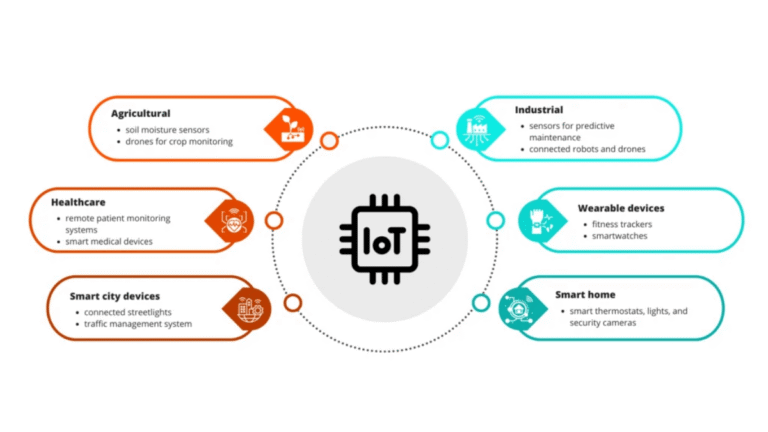
The Internet of Things is used across a wide range of sectors, from consumer devices to logistics, buildings, and industry. In industrial environments, IoT makes it possible to monitor, for example, the condition of machinery, production processes, energy consumption, and environmental conditions.
However, the value of IoT does not come simply from connecting devices to a network. What matters is how the data they generate is processed and used to improve operations. IoT data can also serve as one of the data sources for a digital twin, where information from the physical environment is integrated into a digital representation.
Definition of the Internet of Things
Simply put, the Internet of Things refers to a network in which physical devices collect information about their environment and transmit it for use by other devices or information systems.
An IoT system typically consists of a physical device, sensors used to collect data, a data connection, and a system or application in which the collected data is processed and utilized.
A sensor can measure, for example, temperature, pressure, humidity, vibration, energy consumption, location, or the operating status of a device. The measurement data is transmitted to a system where it can be visualized, analyzed, or used to trigger automated actions.
In this way, IoT enables the flow of information between the physical world and digital systems. In industry, this connection provides the foundation for real-time monitoring of machines and processes, remote monitoring, and data-driven operational improvements.
Examples of the Internet of Things
Internet of Things applications range from simple measurement solutions to large-scale systems in which thousands of devices continuously generate data.
In industry, IoT can be used, for example, to:
- monitor the temperature, vibration, or utilization rate of production machinery
- identify equipment maintenance needs
- measure energy consumption
- monitor conditions in production processes
- track the location of products, materials, or equipment
- transmit alerts about anomalies and faults
- remotely monitor production, as well as support tracking and reporting.
For example, a sensor installed on a machine can continuously collect data on the machine’s vibration. If the measured values begin to deviate from normal levels, the data can be used to identify a potential need for maintenance before the issue leads to an actual equipment failure. This type of continuous condition monitoring provides one of the foundations for predictive maintenance.
The use of IoT therefore depends on what needs to be monitored and how the collected data is intended to be used. Next, we will take a closer look at the Industrial Internet of Things and how IoT is used in production environments.
Industrial Internet of Things
The Industrial Internet of Things, or Industrial IoT (IIoT), refers to the use of IoT technologies in industrial machinery, equipment, and production processes. It enables continuous data collection from the physical production environment and the transfer of that data to systems where it can be used for purposes such as production monitoring, maintenance, and operational improvement.
In consumer-oriented IoT, household appliances, smart devices, and other products used in everyday life can be connected to a network. Industrial IoT has different applications: the object being monitored may be a production machine, a production line, process equipment, or an entire factory.
In industrial environments, the requirements placed on IoT solutions are often demanding. Production may run around the clock, equipment may have a long service life, and the same environment may contain automation and information systems of different ages. Reliable access to data and seamless data flow between different systems are therefore essential to making effective use of Industrial IoT.
Industrial IoT can be used, for example, to monitor machine operation, detect anomalies, identify maintenance needs, and provide an up-to-date view of production status. The collected data can also be used to monitor and control the manufacturing process and improve production performance.
Industrial IoT is also a key part of Industry 4.0, where machines, automation, data, and digital systems are becoming increasingly interconnected as part of smart manufacturing.
However, adopting IoT does not mean that an industrial company needs to replace all of its existing systems. The goal is often to make better use of data generated by existing machines, automation systems, and other data sources. Data integrations play an important role here, as they make it possible to combine information from different sources and use it as an integrated whole.
Ultimately, the value of Industrial IoT comes from how the collected data is used. Simply collecting data does not improve production; the information must be made available to the right users in a form that supports monitoring, analysis, and decision-making.

The Internet of Things in Practice
The Internet of Things delivers practical value when data collected from the physical environment is connected to a clear use case. In industry, the goal may be, for example, to monitor machine condition, oversee production, measure energy consumption, or detect anomalies. In a typical IoT solution, sensors collect data from the physical environment, the data is transmitted over a network to a system, and an IoT application makes it available to the user. The collected data can be visualized and analyzed, and it can also be used to trigger alerts or other automated actions. An IoT solution therefore does not need to be a large-scale system. Implementation can begin with a specific need, such as monitoring a single critical piece of equipment, and later be expanded to cover multiple machines, production lines, or the entire production environment.IoT Application
An IoT application is a practical use case in which data collected from connected devices is used to solve a specific problem or improve operations. In industry, an IoT application can, for example, monitor the operation of a production machine and notify the user if a measured value exceeds a defined threshold. In another use case, the same IoT technology can be used to monitor energy consumption, report production volumes, or track equipment utilization. IoT applications can also automate the flow of information. For example, an abnormal measurement value can trigger a fault notification or another alert, eliminating the need for the user to continuously monitor every measurement manually. In production environments, IoT applications can therefore support industrial monitoring by making information about the status of machines, equipment, and processes available to users. However, the practical benefits of IoT depend on how well the application addresses a genuine need. Instead of collecting every possible piece of data, it is better to first define what needs to be monitored, why the information is important, and what users should be able to do based on it.Sensors Connect the Physical Environment to Data
Sensors are a key component of the Internet of Things because they make it possible to convert events in the physical environment into digital data. A sensor can measure, for example, temperature, pressure, humidity, vibration, movement, location, or energy consumption. In an industrial environment, however, an individual measurement produced by a sensor is usually not the most important factor. The value only becomes meaningful when it is known which machine or process it relates to, what the normal range is, and how the measurement changes over time. For example, the vibration of a production machine can be continuously monitored using a sensor. If the vibration pattern changes, this may indicate a change in the condition of the equipment and a potential need for maintenance. When measurement data is monitored over a longer period, it can also be used for anomaly detection. Sensor data can also serve as one of the data sources for a digital twin. When measurement data from the physical environment is combined with a digital representation of a machine or production environment, users can view the data in its proper context. We will explore this connection in more detail later in this article in the section IoT and the Digital Twin. An IoT solution therefore consists not only of sensors but also of data transmission, systems, and applications that transform the collected data into useful information for users. Next, we will take a closer look at IoT technology in industry and how automation technology, data processing, and manufacturing process monitoring fit into this overall framework.
IoT Technology in Industry
IoT technology creates a connection between the physical production environment and digital systems. Data collected from machines, sensors, and automation systems can be transferred for use by other systems, providing a more up-to-date and comprehensive view of production.
In an industrial environment, however, IoT does not typically operate as a standalone system. It is used alongside systems such as automation, manufacturing execution, maintenance, and enterprise resource planning systems. One of the roles of IoT is to enable the flow of information between these systems and the physical production environment.
The key challenge is therefore not only collecting data, but also integrating information from different sources and transforming it into a form that is useful to the user.
Automation Technology and IoT
Automation technology has long enabled the measurement, monitoring, and control of industrial machines and processes. IoT complements this by enabling data generated by automation systems and other data sources to be used more broadly across different applications and user groups.
For example, data generated by automation systems can be combined with maintenance, production planning, or business data. This allows the same production data to be viewed from different perspectives rather than remaining confined to a single automation system.
In industrial environments, various technologies and standards can be used to transfer data between systems. One of these is OPC UA, which is used for data exchange between machines, automation systems, and other industrial systems.
Combining IoT with automation technology therefore makes it possible to utilize production data beyond the original purpose of the automation system.
Data Processing
IoT systems can generate large volumes of data, but the amount of data does not in itself create business value. What matters is data processing: how individual measurements are transformed into meaningful and understandable information for the user.
Data processing can involve, for example, combining and filtering data, comparing it with historical data, or presenting it visually. This means that users do not need to examine thousands of individual measurements but can instead focus on observations, changes, and anomalies that are relevant to their work.
This is where data integrations play a key role. They make it possible to combine data from different machines, systems, and data sources into a unified whole for further processing and use.
Manufacturing Process Monitoring and Control
One of the key application areas of Industrial IoT is the monitoring and control of manufacturing processes. When data from machines and production stages is collected continuously, production can be monitored in real time and deviations can be addressed more quickly.
IoT data can help monitor, for example, machine operating status, production volumes, process conditions, and production progress. When this information is combined with data from other production systems, users gain a broader view of what is happening throughout the manufacturing process.
Industrial companies use various systems to plan, execute, and monitor production. ERP, MES, and MRP systems each have their own roles in managing production and business operations, and the real-time data generated by IoT can complement the information they provide.
With IoT, manufacturing process monitoring can therefore be based on increasingly up-to-date information. At the same time, data collected from production can be used for subsequent analysis, reporting, and operational improvement—not only for monitoring the current situation.
Benefits of IoT for Businesses
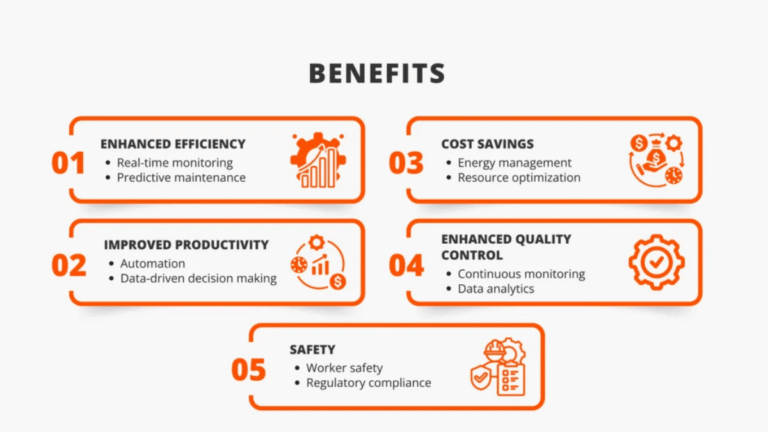
The benefits of IoT for businesses come primarily from gaining more up-to-date information about the operation of machines, equipment, and processes. When data collected from the physical environment is made available to users, operations can be monitored, deviations can be addressed, and decisions can be made based on actual operational data.
In industry, the Internet of Things can help reduce unplanned downtime, improve maintenance efficiency, enhance production monitoring, and identify opportunities for process improvement. At the same time, automated data collection reduces the need for manual monitoring and provides more accurate information to support operational improvements.
However, the business value of IoT does not come from collecting as much data as possible. Value is created when relevant events can be identified from the collected data and translated into practical actions.
Maintenance Needs and Notifications
Continuous monitoring of the condition of machines and equipment is one of the key benefits of Industrial IoT. Sensors can be used to collect data on factors such as temperature, vibration, pressure, operating hours, and other values that indicate equipment performance.
When a predefined deviation is detected in the measured values, the system can automatically generate an alert or fault notification. This means that maintenance does not have to rely solely on scheduled inspections or situations where equipment has already failed.
Over the longer term, collected data can also be used to assess maintenance needs. As historical data on equipment behavior accumulates, changes can be identified earlier and maintenance activities can be planned based on actual operating conditions.
This provides the foundation for predictive maintenance, where data describing equipment condition is used to assess future maintenance needs and potential failures.
With IoT, maintenance needs and fault notifications can therefore be brought to the attention of maintenance teams earlier, helping to reduce unplanned downtime and target maintenance activities more effectively.
Monitoring and Reporting
IoT enables continuous monitoring of machines, equipment, and processes without the need to collect all data manually. Up-to-date data can be presented in views, dashboards, and reports, allowing users to monitor key metrics relevant to their operations.
Monitoring can focus on factors such as machine utilization, production volumes, energy consumption, process conditions, or detected anomalies. When data is collected automatically, reporting can also be based on more consistent and up-to-date information.
Especially in environments with multiple machines, production lines, or sites, centralized monitoring makes it easier to build a comprehensive overview of operations. Remote monitoring in industry makes it possible to monitor the status of production and equipment even when an expert is not physically present on site.
However, the purpose of monitoring and reporting is not only to show what is happening at the moment. The collected data also creates a historical record that can be used to analyze and improve operations.
Historical Monitoring and Operational Improvement
Historical data collected through IoT enables retrospective monitoring: an organization can examine what happened in production, when a change began, and how the actions taken affected operations.
Retrospective monitoring is useful, for example, when investigating production disruptions and anomalies. Instead of assessing the sequence of events based solely on memory or individual observations, systematically collected data from the time of the event is available for analysis.
Historical data can also be used to compare different periods, identify recurring patterns, and assess the impact of improvement measures. In this context, industrial data analytics helps transform collected data into insights that can be used to improve operations.
In this way, IoT supports continuous improvement: data is first collected from production, then monitored and analyzed, and finally the resulting insights are used to improve operations. As this cycle is repeated, companies can evaluate improvement measures based on actual data and identify new opportunities to increase efficiency.
IoT Security in Industry
As more machines, equipment, and sensors are connected to networks, the importance of IoT security also increases. In industrial environments, Internet of Things security is particularly important because IoT solutions may process data related to production, machinery, and processes, as well as establish connections between different systems.
When planning IoT security, it is important to identify which devices are connected to the network, what kind of data they collect, and which systems the data is transferred to. User access rights, device and software updates, and secure data transmission are also important parts of the overall approach.
In industrial environments, another challenge can be integrating new IoT solutions with existing automation and information systems. As IT and OT environments converge, security must be considered holistically to ensure that connections between systems are implemented in a controlled manner.
IoT security should therefore be taken into account from the solution design stage rather than only after implementation. When devices, data transmission, integrations, and access rights are designed as part of the same overall solution, the IoT system can be developed and expanded in a more controlled manner.
The goal of Industrial IoT is to make more effective use of the data generated by machines and processes. At the same time, it is essential to ensure that data is transferred between different systems appropriately and securely.
IoT and the Digital Twin
IoT and digital twins complement each other. IoT enables data to be collected from physical machines, equipment, and processes, while a digital twin helps integrate this data into a broader digital representation.
Sensors and IoT devices can be used to collect data on factors such as machine condition, temperature, energy consumption, utilization, and events within the production process. In a digital twin, this information can be linked to the corresponding machines, equipment, spaces, or processes, allowing users to view the data in the correct context.
IoT can therefore serve as one of the key data sources for a digital twin. A digital twin, in turn, helps transform data from different sources into a visual representation that is easier for users to understand. Such a representation, based on real-time and other operational data, can be described as a data-driven digital twin.
Turning IoT Data into Useful Information for Users
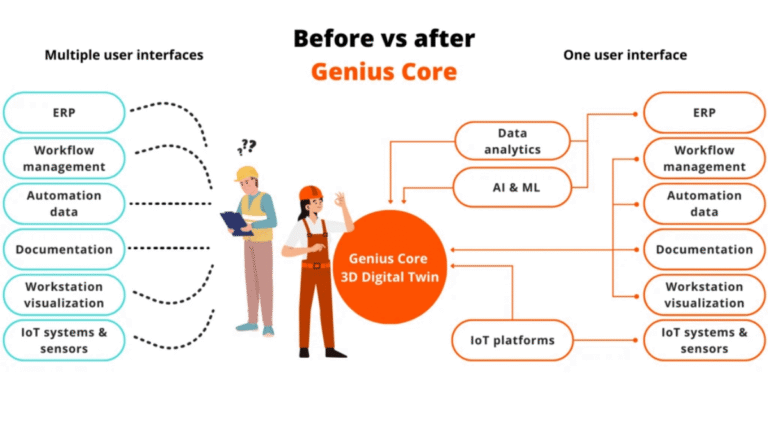
In an industrial environment, data can be generated simultaneously by IoT devices, automation systems, production management, maintenance, and numerous other systems. The more data sources an organization has, the more challenging it can become to find the information that matters.
Large volumes of data can lead to data noise: users have access to a wealth of information, but identifying the insights relevant to their work becomes more difficult. In such cases, the solution is not necessarily to collect more data, but to better structure and visualize the information that already exists.
A digital twin can be used to present IoT data in the context of the physical operating environment. For example, a user can view a production facility in a digital representation and see measurement, maintenance, or production data associated with a specific machine directly alongside that piece of equipment.
At the same time, views can be tailored to the needs of different user groups. A maintenance specialist needs different information than a production manager or operator. When users are provided with the information relevant to their tasks in a single view, it becomes easier to make effective use of the data.
Genius Core™ Connects Different Data Sources to a Digital Environment
Process Genius’s Genius Core™ 3D Digital Twin Platform is designed to integrate data from different systems and data sources into a visual digital environment. IoT data can form one part of this environment alongside data from automation, production, and maintenance systems, for example.
In the Genius Core™ environment, information can be viewed according to the user’s needs, rather than requiring each user to search for the information they need across separate systems. This brings IoT-generated data closer to day-to-day operations and decision-making.
In practice, combining different data sources requires integrations. Genius Core™ integrations make it possible to integrate data generated by existing systems into a digital twin without having to replace all existing systems.
The combination of IoT and a digital twin thus helps establish a connection between the physical production environment, the data collected from it, and the people who use that information. IoT provides visibility into real-world events, while the digital twin helps present this information to users in an understandable format that supports their work.
IoT in the Future of Industry
Industrial IoT continues to evolve toward increasingly intelligent and connected production environments. As the volume of data generated by machines, sensors, and systems grows, the focus is shifting from simply collecting data to using it more effectively to improve production and support decision-making.
Artificial intelligence, machine learning, and advanced data analytics offer new opportunities for utilizing IoT data. Historical and real-time data can be used, for example, to detect anomalies, generate forecasts, and identify opportunities for production improvements that would be difficult to discover through manual monitoring alone.
IoT is therefore a key component of connected manufacturing, where machines, automation, data, and digital systems form an increasingly integrated whole.
However, the future of Industrial IoT will not be determined by how much data a company can collect. Competitive advantage comes from how effectively existing information can be integrated, processed, and made available to the right users.
As IoT, analytics, and digital twins continue to evolve, the connection between the physical production environment and digital information will become even stronger. This supports the industry’s transition toward more data-driven operations, where production can be monitored, analyzed, and improved based on increasingly up-to-date information.
FAQs
What does IoT, or the Internet of Things, mean?
IoT (Internet of Things) refers to connecting physical devices, machines, and other objects to a network so that they can collect and transmit data. In industry, IoT can be used to collect information on factors such as machine operation, production processes, energy consumption, and environmental conditions.
What does the Industrial Internet of Things mean?
The Industrial Internet of Things, or Industrial IoT (IIoT), refers to the use of IoT technologies in industrial machines, equipment, and production processes. Industrial IoT can be used, for example, to monitor production in real time, detect anomalies, assess maintenance needs, and use machine-generated data to improve operations.
What are some examples of IoT in industry?
Examples of IoT in industry include monitoring machine condition with sensors, measuring energy consumption, monitoring production process conditions, tracking equipment utilization, and generating automatic alerts and fault notifications. IoT can also be used for remote production monitoring, tracking, and reporting.
What are the benefits of IoT for businesses?
The benefits of IoT for businesses are particularly related to improved visibility, automated data collection, and more effective use of data. In industry, IoT can help reduce unplanned downtime, improve maintenance efficiency, monitor production performance, and identify opportunities for operational improvement.
IoT data can also be used in industrial data analytics, allowing trends, anomalies, and other insights relevant to decision-making to be identified from the collected data.
How does IoT help predict maintenance needs?
IoT sensors can continuously monitor factors such as machine temperature, vibration, pressure, or operating hours. When changes in equipment behavior are detected, potential maintenance needs can be identified before an actual failure occurs. Historical data and analytics can also support the transition toward predictive maintenance.
How is IoT security addressed in industry?
IoT security requires consideration of connected devices, their access rights, software and device updates, and secure data transmission. In industry, security must be considered as part of a broader framework because IoT solutions can connect physical equipment, automation systems, and other information systems.
What is the difference between IoT and a digital twin?
IoT and digital twins are closely related, but they are not the same thing. IoT enables data to be collected and transmitted from physical machines, equipment, and processes. A digital twin, in turn, helps integrate information from different sources into a digital representation of a physical asset or operating environment.
IoT can therefore serve as one of the data sources for a digital twin. Read more about what a digital twin is and how it is used in industry.
How should a company get started with Industrial IoT?
The best way to get started with Industrial IoT is to begin with a clear use case rather than aiming to collect as much data as possible. The first use case could involve monitoring the condition of a critical machine, measuring energy consumption, monitoring production, or identifying maintenance needs.
The next step is to determine what data is needed, where it can be obtained, and how the information will be made available to users. The solution can later be expanded to additional machines, processes, and use cases.